
Keynote Speakers
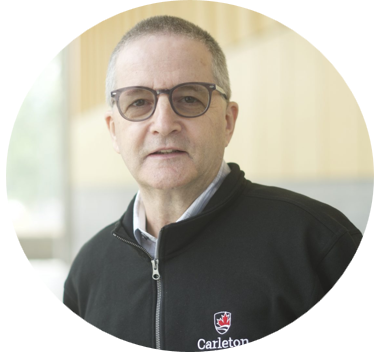
Prof. Michel Barbeau
University of Carleton (Canada)
Quantum AI and ML: New Resources and New Threats
Artificial Intelligence (AI) and Machine Learning (ML) are becoming the primary approaches to universal problem-solving, including in cybersecurity. Furthermore, the capabilities of quantum technology are expanding at a rapid pace. Together, they are meeting to create quantum AI and ML, specifically new quantum-based cybersecurity defense tools, as well as potentially quantum-enabled adversaries. Indeed, future quantum computers will give adversaries an edge over defenders, unless the defenders adopt the same technology themselves. We present concepts for advanced cybersecurity defense architectures that integrate principles from quantum computing, AI, and ML. Using case studies, we demonstrate how cybersecurity defenders can adapt and refine their tactics to predict and respond effectively to attacks, leveraging quantum resources.
Biography
Michel Barbeau is a professor of Computer Science. He got a Bachelor’s (Université de Sherbrooke, Canada ’85), a master’s, and a Ph.D. in Computer Science (Université de Montréal, Canada ’87 & ’91. From ’91 to ’99, he was a professor at Université de Sherbrooke. During the 98-’99 academic year, he was a visiting researcher at the University of Aizu, Japan. Since 2000, he has worked at Carleton University’s School of Computer Science in Canada. His primary area of expertise is computer networks, specifically architecture and protocols. Specific research interests include quantum computing, underwater communications and networks, flying drone networks, quantum networks, and network control systems. Michel Barbeau has numerous publications in the field of AI and quantum computing.
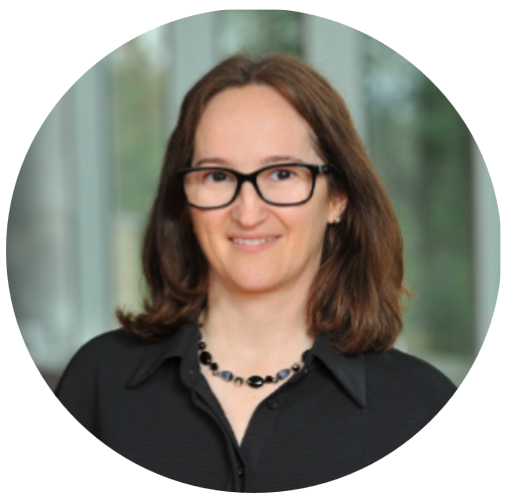
Prof. Gabriela Nicolescu
Polytechnique Montréal (Canada)
Cybersecurity for avionics
The rapid integration of cutting-edge technologies into avionics infrastructure has revolutionized the sector but introduced new vulnerabilities. This presentation discuss the main security challenges and propose solutions for current and future airplanes. We will present security for inter and intra airplanes communications integrating new technologies like artificial intelligence and post-quantum cryptography. The application of co‐emulation‐based techniques with the involvement of humans, i.e. pilots and air traffic controllers will be also presented.
Biography
Gabriela Nicolescu is professor and director of the Department of Computer and Software Enigneering at Polytechnique Montréal. She is member of IMC2 Institute and RESMIQ Québec strategic groupe. Her research interests are in the field of security and efficient design for current and future architectures of embedded systems. She is very active in the field of security for avionics, working in collaboration with several industrial partners and academics. She is member of IMC2 Institute

Thierry Gagnon
Kelvin Zero (Canada)
Zero Trust Starts at the Door: Rethinking Identity & authentication to build the Zero Trust future we need
In a world where credential theft remains the number one cause of security breaches, it’s time to rethink digital identity. Whether you’re securing remote teams, critical infrastructure, or hybrid environments, traditional perimeter architectures perimeter-based security is no longer sufficient. The Zero Trust model has emerged as a transformative approach to cybersecurity. Yet, despite its growing adoption, many implementations overlook a foundational element: identity.
This presentation explores why true Zero Trust begins not at the network edge, but at the door-where identity and authentication serve as the first line of defense.
We’ll examine the evolving threat landscape, where identity-based attacks are on the rise, and discuss how legacy authentication methods fall short in a world of sophisticated adversaries and distributed workforces. Through real-world case studies and cutting-edge research, we’ll highlight the critical role of continuous identity verification, adaptive access controls, and decentralized identity frameworks in building resilient Zero Trust architectures.
Join us to rethink how we define trust in digital systems-and why securing identity is the key to unlocking the full potential of Zero Trust. Zero Trust starts at the door-are you ready to open it?
Biography
Thierry is the Chief Technology Officer and co-founder of Kelvin Zero, where he leads the development of secure digital identity and data-sharing solutions. With strong expertise in applied cryptography, authentication protocols, and digital trust architectures, he bridges research and practical implementation.
Previously, he worked for the Canadian government in cyber threat intelligence and malware analysis, contributing to the protection of national critical infrastructures. He also serves as a mentor at Polytechnique Montréal’s Propolys incubator, supporting innovation in secure systems design, and has contributed to national standards and Zero Trust initiatives.
Thierry is the co-inventor of several cybersecurity patents and leads Secur-e-Health, a privacy-preserving identity and data-sharing project under the ITEA 4 program. He is a graduate of the Université du Québec en Outaouais (UQO).